


How to choose an industrial ice machine manufacturer for food processing
Your industrial ice machine manufacturer choice hinges on three factors: your food safety requirements, daily production volume, and the ice type you need. Each application demands a different machine. Choosing the right industrial ice machine manufacturer means matching specifications to your operation's exact demands. Your food safety protocols, peak capacity needs, and ice shape requirements all drive the decision. A mistake here affects product quality and costs. That is why this guide leads you through a practical evaluation framework. You will assess needs, certifications, machine quality, service, and reputation. Follow it to secure a reliable partner.
Key Takeaways
Match your ice type, daily capacity, and facility space to the machine before buying.
Verify certifications like NSF, FDA, and ISO9001 to ensure food safety compliance.
Inspect food-grade 304 stainless steel materials and automated cleaning features.
Compare warranty terms, spare parts availability, and energy consumption per ton.
Review client case studies and visit factory sites to confirm manufacturer reliability.
Define Ice Needs for Food Processing
Choosing the right ice type begins with your specific processing application. Tube, cube, flake, and block ice each serve different cooling and preservation needs. Your selection directly affects product quality, food safety, and operating costs. A reliable industrial ice machine manufacturer ensures you get equipment matched to these requirements.
Match Ice Type to Application
Tube ice delivers dense, slow-melting cubes ideal for beverage cooling and general food contact. Cube ice provides uniform melting for display cases and packaged products. Flake ice offers rapid surface cooling for seafood, poultry, and produce. Block ice supplies long-lasting cooling for transport and bulk storage. ICEMA covers tube ice from 1 to 30 tons per day, cube ice from 1 to 10 TPD, flake ice from 2 to 30 TPD including seawater models, and block ice from 1 to 30 TPD in direct cooling, brine, and transparent varieties.
Ice type and container selection together influence contamination risk. See the table below for key effects.
Aspect of Ice/Container Selection | Effect on Contamination Risk |
|---|---|
Fish tubs (triple-layer polyethylene with freshwater and ice) vs. fish boxes (HDPE with layered fish and ice) | Fish tubs significantly reduced bacterial growth during 3–5 day storage under temperature abuse by minimizing fish temperature increases |
Ice as a contamination source | Ice used in distribution/retail can transfer microbial cells to products via cross-contamination; contaminated ice acts as both reservoir and vector |
Products displayed on ice vs. not on ice | 1.7-fold higher prevalence of Salmonella contamination on ice-displayed aquatic foods (p < 0.0001) |
Mitigation measures | Pre-cooled intact containers with lids; near-0 °C water fully covering products; complete ice coverage with timely replenishment; storage ≤5 days; consistent temperature control |
Using fresh, clean ice for each batch prevents spoilage bacteria growth. Flake ice's rapid heat transfer reduces temperature spikes that promote microbial activity. Ice from poor-quality water introduces E. coli risk, so source quality matters.
Flake ice machines use less energy per piece than tube ice machines, and flake ice has competitive production costs per ton when running at full capacity.
Calculate Capacity, Space, and Budget
Match daily ice output to your peak demand using manufacturer sizing guides. Oversizing wastes capital; undersizing disrupts operations during high-demand periods. An industrial ice machine manufacturer can help you calculate correct tonnage for your facility.
Communicate your market requirements, required capacity, and local power supply to the manufacturer. This ensures the machine fits your layout and electrical infrastructure. ICEMA's range covers 1 to 30 TPD across most ice types, giving you flexibility for different operations and facility sizes.
Evaluate Industrial Ice Machine Manufacturer Credentials
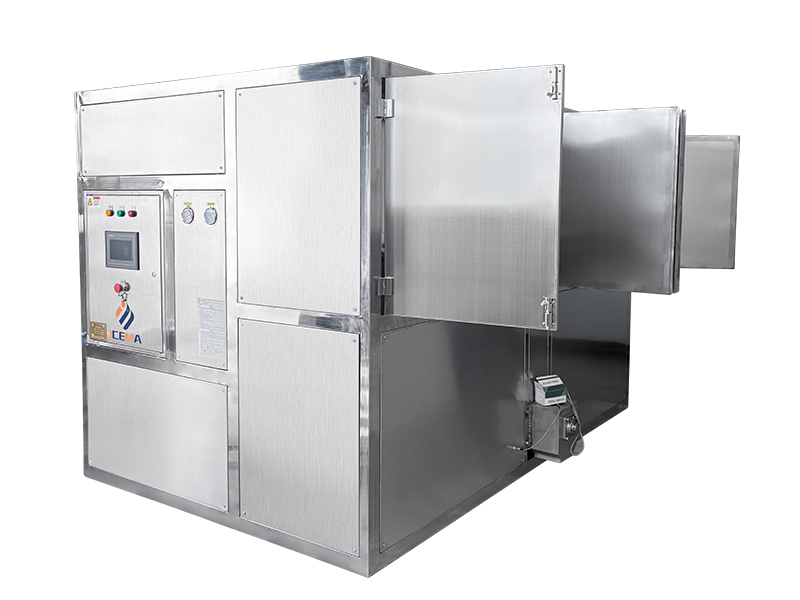
Food safety starts with certifications. You need a manufacturer that meets global standards for hygiene and quality. The wrong choice introduces contamination risks that damage your brand. Here is how to verify credentials and experience.
Check Food Safety Certifications
You must verify several key certifications before purchasing. NSF certification ensures the machine meets sanitation standards for direct food contact. FDA compliance confirms materials are safe for food processing environments. HACCP certification shows the manufacturer follows hazard analysis and critical control point principles. CE marking indicates the product meets European safety requirements. ASME compliance covers pressure vessel design and safety. ISO9001 registration demonstrates quality management system standards.
An industrial ice machine manufacturer with these certifications gives you confidence in food safety. ICEMA holds CE certification, ASME compliance, and ISO9001 registration. These credentials mean the machines are designed and built for food-grade applications.
Why do certifications matter for your operation? Without them, you risk equipment that harbors bacteria or leaches contaminants. Ice directly contacts food products. Any contamination transfers to your finished goods. NSF and FDA certifications require food-grade materials like 304 stainless steel. HACCP principles ensure the manufacturer controls contamination points during production. Certifications also affect your audits. Food processing facilities undergo regular inspections. Your machine's certifications become part of your documentation. Missing credentials means failing inspection or losing client approvals.
Assess Food-Sector Experience
Experience in food processing matters more than general manufacturing history. A manufacturer that understands food safety protocols builds better machines. Start by checking years in business and countries served. Global reach proves the company can handle different regulations and climates. Most top-tier food-grade ice machine manufacturers export to over 50 countries. You can use this number as your minimum threshold.
ICEMA serves over 150 countries. This scale means the company has navigated diverse food safety regulations worldwide. It has installed machines in tropical fisheries, desert meat plants, and cold storage warehouses. Each installation teaches the manufacturer how to adapt equipment for different conditions.
Examine food-sector references carefully. Ask for case studies from similar food processing operations. A manufacturer should provide examples in fisheries, poultry plants, or beverage production. Compare manufacturers like Hoshizaki and Ice-O-Matic for durability and maintenance needs. Hoshizaki machines are known for reliability in commercial kitchens. Ice-O-Matic offers modular designs that simplify service. Both companies have decades of food-sector experience.
Request client testimonials specific to food processing applications. A manufacturer without relevant references likely lacks food-sector expertise. Factory site visits let you verify production quality firsthand. You see how they build machines, test components, and handle materials. Verify service capabilities in your region. Check spare parts availability and response times.
The right industrial ice machine manufacturer demonstrates both certifications and experience. You need documented proof of compliance and a track record in your industry. Do not rely on marketing claims alone. Ask for documentation. Verify through third-party sources. Your food safety program depends on this equipment.
Inspect Machine Quality and Efficiency
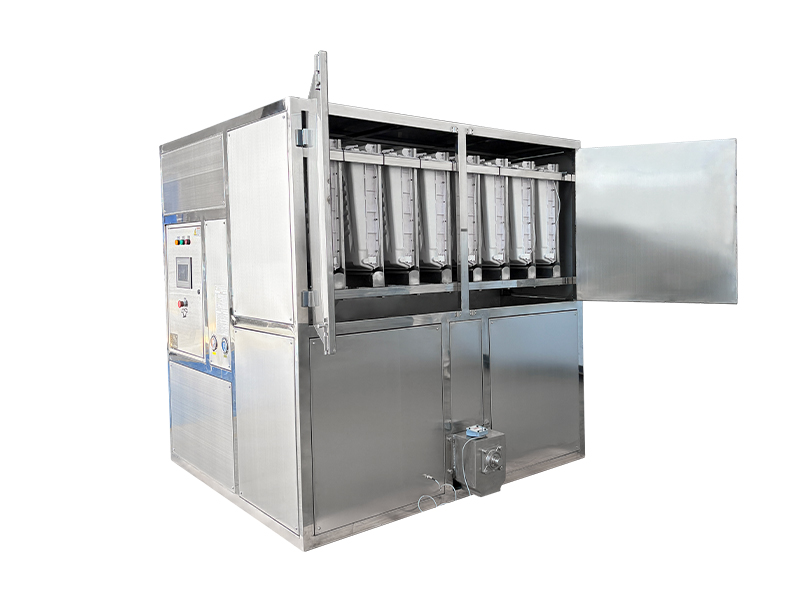
Machine quality determines how long your equipment lasts and how safe your ice remains. You must inspect materials, sanitation design, and operating costs before you commit. A capable industrial ice machine manufacturer builds machines that protect your products and your budget.
Review Materials and Sanitation
Food-grade 304 stainless steel is the baseline for evaporators and housings. This material resists corrosion, does not leach chemicals, and creates a non-porous surface. Bacteria cannot hide in scratches or pits the way they do on lower-grade metals. You reduce contamination risk every time ice touches a clean stainless surface. Ask the manufacturer to document the steel grade for every wetted part. Some suppliers substitute 201 or 430 stainless in hidden areas. Those grades corrode faster and compromise food safety over time.
Sanitation features separate professional machines from budget models. Look for smooth interior welds, rounded corners, and drain designs that prevent standing water. PLC intelligent control adds another layer of protection. The system monitors production cycles, flags temperature deviations, and automates cleaning sequences. You spend less time on manual sanitation and more time on production. Automation also reduces human error during defrost and harvest cycles. Ice quality stays consistent across every batch.
Ease of cleaning affects your daily labor costs. Machines with removable panels, accessible evaporators, and self-draining reservoirs cut cleaning time significantly. Ask how long a full sanitation cycle takes. Request the cleaning procedure in writing. A manufacturer confident in its design will provide detailed maintenance documentation.
Compare Energy and Operating Costs
Energy consumption drives your long-term costs more than purchase price. Compare refrigeration systems across manufacturers. ICEMA builds energy-efficient refrigeration systems that perform in extreme environments. The machines operate in high-salinity coastal areas without premature corrosion. They also run in desert heat up to 55°C without losing capacity. That resilience matters if your facility faces harsh conditions.
Evaluate these performance factors across your shortlist:
Factor | What to Compare |
|---|---|
Ice clarity | Crystal-clear ice signals proper freezing and pure water |
Cube consistency | Uniform size and density reduce waste and improve cooling |
Operating efficiency | Energy use per ton of ice produced |
Maintenance requirements | Service intervals, part replacement frequency, downtime risk |
Ice clarity tells you about water treatment and freezing speed. Cloudy ice often contains trapped air or dissolved solids. Cube consistency affects how your product cools. Irregular cubes melt unevenly and leave gaps in display or storage. Operating efficiency determines your monthly utility bill. Maintenance requirements predict how often your line stops for repairs.
Request energy consumption data in writing. Compare kilowatt-hours per ton across manufacturers. Ask about compressor types, refrigerant choices, and heat rejection methods. A machine that costs more upfront may save thousands in electricity over its service life. Factor in local power supply quality as well. Voltage fluctuations damage compressors and control boards. Confirm the machine handles your actual electrical conditions.
Assess Service, Support, and Reputation
A manufacturer's service network protects your operation long after installation. You need fast access to parts, technical help, and trained technicians. Weak support turns a minor breakdown into a costly shutdown.
Review Warranty and Spare Parts
Warranty terms reveal how much confidence a manufacturer has in its equipment. ICEMA offers a 2-year compressor warranty, which covers the most expensive component in your machine. Ask every supplier for written warranty details. Compare coverage length, what parts are included, and whether labor is covered. A strong warranty reduces your financial risk.
Spare parts availability directly affects your total cost of ownership. Long-term costs may include cleaning, inspections, spare parts, component replacement, and preventive maintenance. Easy access to service parts and technical support can help reduce downtime. Research the manufacturer's reputation, parts availability, and service network. A reliable partner prevents future cost and stress.
Beyond parts, evaluate the full support package. Does the manufacturer provide technical assistance, operator training, and turnkey solutions? ICEMA handles design, production, logistics, installation, and after-sales support. This end-to-end approach means you work with one accountable partner. Ask how quickly the company responds to service requests in your region.
Verify Through Case Studies and Site Visits
Reputation claims mean little without proof. Request client testimonials and case studies from food processing operations similar to yours. Verified results show how an industrial ice machine manufacturer performs under real conditions.
Strong case studies demonstrate stability and cross-industry trust:
A 30-ton cube ice machine with a fully automatic palletizing line in North America enabled intelligent, continuous operations, reducing labor costs and boosting plant efficiency.
A global premium wine brand built the Andean region's first solid flat-cut tube ice factory using a full-spectrum solution, gaining strong local recognition.
A North American tube ice production line appeared on local TV, with crews documenting real operating conditions.
One client expanded from 5 tons to 110 tons over three years, showing that repeat orders reflect accumulated trust.
Factory site visits let you inspect production quality firsthand. Request documentation for every claim, then compare shortlisted manufacturers using a checklist. This methodical approach protects your investment.
Your decision rests on five criteria. Define your ice type and capacity. Verify certifications like NSF and FDA. Inspect materials and energy efficiency. Assess warranty and service support. Confirm reputation through case studies and site visits. This methodical evaluation protects food safety and long-term ROI.
Gather written warranty terms, parts availability details, and client references before signing any contract. Use a comparison checklist to evaluate each shortlisted manufacturer. Compare quotes based on total cost of ownership, not just purchase price. Request documentation for every claim made during the sales process. Then request quotes from the top contenders. A careful selection ensures your ice machine delivers consistent, safe ice for years.
FAQ
What certifications should I verify before buying an industrial ice machine?
You need NSF, FDA, HACCP, CE, ASME, and ISO9001 credentials. These certifications prove the machine meets food safety and quality standards. ICEMA holds CE certification, ASME compliance, and ISO9001 registration. Always request written proof before you sign a contract.
How do I calculate the right ice production capacity for my facility?
Match daily output to your peak demand. Use the manufacturer's sizing guide to avoid shortages during busy periods. ICEMA offers machines from 1 to 30 tons per day across most ice types. Share your market requirements, capacity needs, and local power supply with the manufacturer.
What warranty and spare parts support should I expect?
Look for a warranty covering the compressor, the most expensive component. ICEMA provides a 2-year compressor warranty. Confirm spare parts availability and response times in your region. Ask about technical assistance, operator training, and turnkey solutions before you commit.
How can I verify a manufacturer's reputation in food processing?
Request client testimonials and case studies from operations similar to yours. Factory site visits let you inspect production quality firsthand. Check years in business and countries served. ICEMA serves over 150 countries. Compare shortlisted manufacturers using a checklist and request documentation for every claim.
What materials should I look for in food-grade ice machines?
Food-grade 304 stainless steel is the baseline for evaporators and housings. This material resists corrosion and creates a non-porous surface. Bacteria cannot hide in scratches. Ask the manufacturer to document the steel grade for every wetted part. PLC intelligent control adds automated cleaning and monitoring.


