


Chile Ice Plant Project: Solving the Steps Between Ice Production and Bagged Sales
A customer in Chile plans to establish a new ice plant to produce 35 mm tube ice for local sales in 5 kg bags. A 5T/24h tube ice machine alone would not address every requirement. The local source-water quality is reported to be poor, ice production and packing may run at different rates, and the ice must move from the machine into the conveying and packing sections.
ICEMA approached the project by following the customer’s operating process, from incoming water to bagged ice, and addressing each connection along the way.
How Much Capacity Does the New Plant Need?
The customer needed to choose a production capacity based on estimated daily ice sales. This decision would also guide the size and arrangement of the storage and packing sections.
Using the customer’s sales estimate, ICEMA selected a 5T/24h tube ice machine as the core of the line and planned the downstream processes around that capacity.
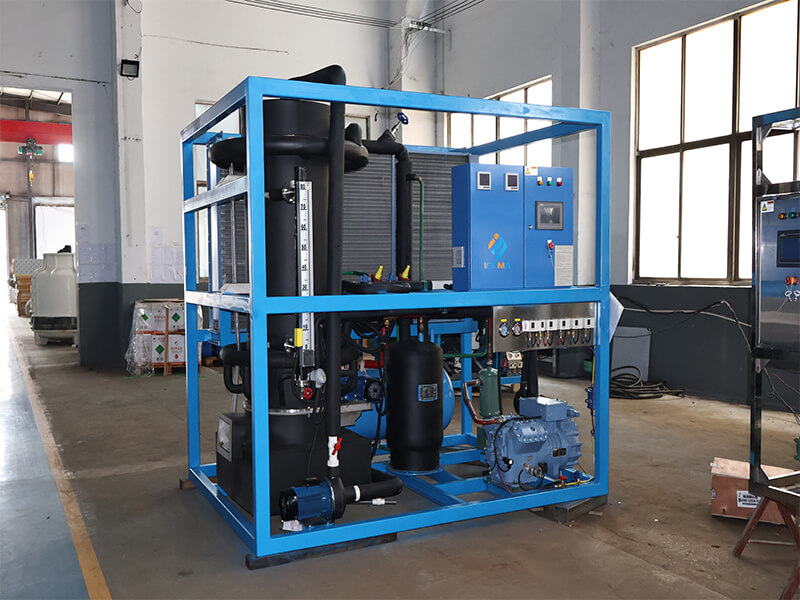
The product specification is 35 mm tube ice, with finished ice packed in 5 kg bags to match the customer’s intended sales format.
The water-cooled machine operates on 380V/50Hz three-phase power and uses R404A refrigerant. According to the project requirements, it includes a RefComp compressor, Siemens PLC, Schneider electrical components, a remote touchscreen and a galvanized steel frame.
How Should the Plant Handle Its Source Water?
The customer reported that the local source-water quality is not ideal. Since the tube ice is intended for sale as edible ice, feed-water treatment needed to be considered alongside the ice machine.
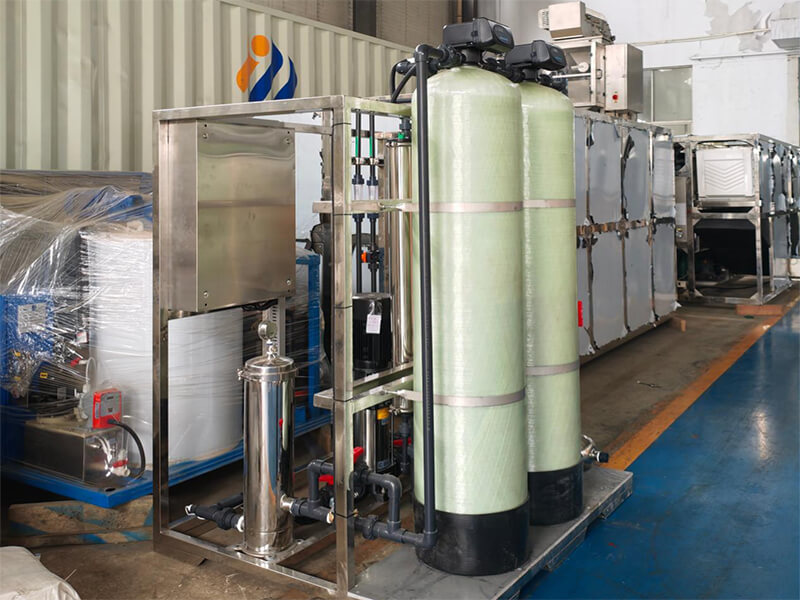
ICEMA incorporated a 500 L/H reverse osmosis system at the beginning of the production process. Source water will be treated before entering the tube ice machine, making water treatment part of the planned line rather than an issue left until after equipment selection. The system’s operating requirements should be confirmed against the actual water conditions at the site.
How Will Ice Reach the Packing Machine?
The customer’s finished product is a 5 kg bag of ice, so the process does not end when ice leaves the tube ice machine. The outlet must connect with the downstream conveying equipment, and the ice must pass through storage before packing.
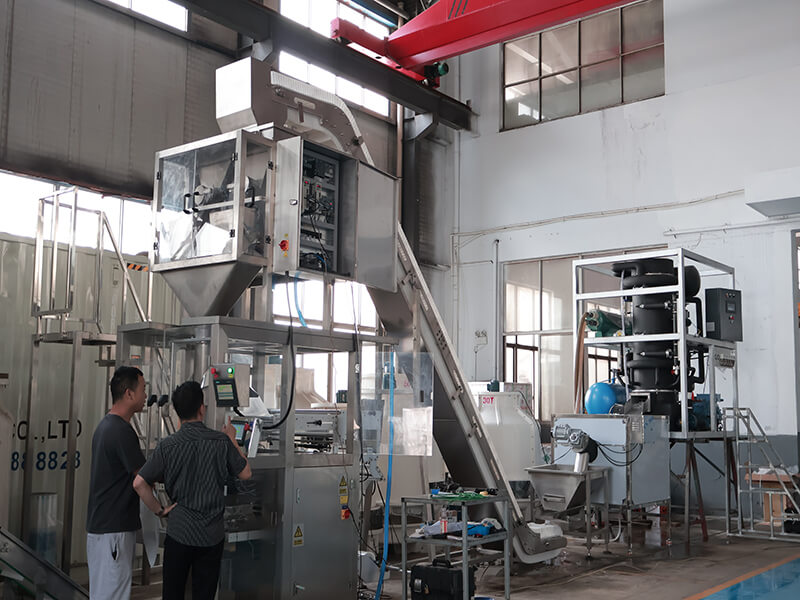
ICEMA customized the machine’s ice outlet for the downstream connection and placed a stainless steel storage hopper between ice production and packing. Ice will enter the hopper after discharge, then move to the automatic packing machine for weighing and bagging.
The hopper also provides temporary storage and a buffer because the ice machine and packing machine may not always operate at the same rate.
How Do the Machines Work as One Production Line?
Water treatment, ice making, storage and packing are handled by different equipment. For a new ice plant, the engineering task is to define how water and ice move through these stages and how the machines connect.
ICEMA planned the process as a whole: treated water enters the tube ice machine; discharged ice passes through temporary storage and conveying before reaching automatic weighing and packing. Feed-water conditions, the connection between the ice outlet and conveying equipment, and the need for a buffer between production and packing were considered together.
The planned production flow is:
Source Water Treatment → Tube Ice Production → Temporary Storage → Conveying → Automatic Weighing → Packing
For a new ice plant, selecting capable individual machines is only one part of the engineering work. In this Chile project, the key task is to address water quality, production capacity, equipment connections and downstream operations within one process. By working through these requirements together, ICEMA developed a production-line plan that takes the customer from incoming water to bagged tube ice.


