


ICEMA Factory Demonstrates Project Coordination Through Suqian Ice Production Plan
The ICEMA factory of Jiangsu ICEMA Refrigeration Equipment Co., Ltd. has developed a 10 ton direct cooling block ice machine configuration for a customer in Suqian, China. The plan brings refrigeration, electrical control, ice pushing and downstream handling into a coordinated production process, illustrating how the factory translates customer requirements into an integrated equipment proposal.
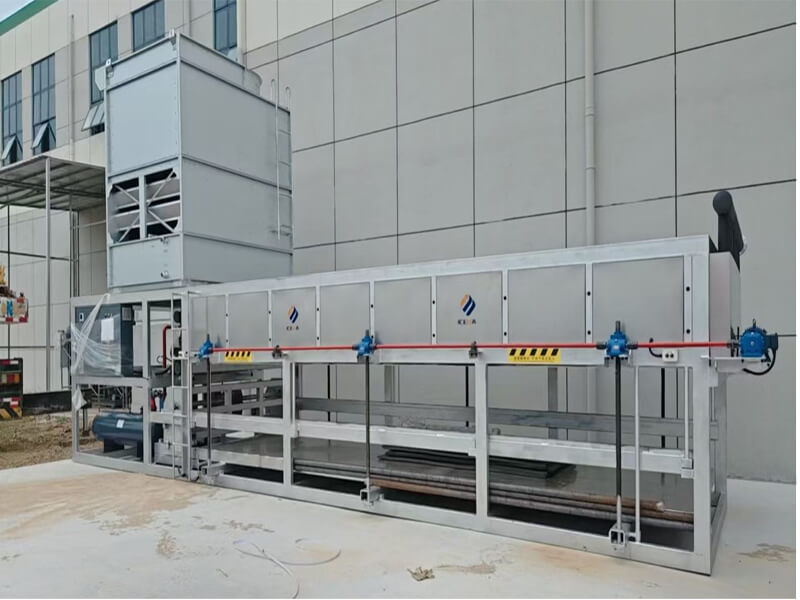
The configuration specifies a Hanbell screw compressor, evaporative condensing, Schneider Electric components, remote control and an ice-pushing system. Its proposed schedule is 255 blocks per batch and two batches per day. Supporting that schedule requires coordination of mould specifications, refrigeration loads, operating sequences and ice removal. Actual output remains subject to final mould dimensions and operating conditions.
Translating Customer Requirements into Engineering Conditions
Taking on an ice production project requires translating the customer’s output plan into equipment requirements and operating conditions. For the Suqian project, block specifications, batch water volume, inlet water temperature and the intended freezing period determine refrigeration demand. Freezing, release, ice pushing and preparation for the next batch together determine the complete production cycle.
Confirming final mould dimensions is therefore an important step in developing the proposal. Reviewing block specifications alongside the planned production schedule provides a basis for equipment selection and commissioning, connecting the customer’s production plan with specific engineering conditions.
Coordinating Refrigeration and Equipment Control
A key integration task is matching the compressor, evaporator and condenser to the same production objective. Direct cooling removes heat through the evaporator walls without an intermediate brine circuit. The compressor and condensing equipment must be matched to the freezing load, installation environment and available water.
Electrical control must also coordinate refrigeration with mechanical movements. Ice removal can begin only after the required freezing conditions are met, and pushing must take place under suitable operating and safety conditions. Remote operating permissions, control scope and protective conditions need to be defined in the final design so that operating interfaces remain consistent with on-site procedures. These are central coordination tasks for the factory’s system integration work.
Addressing Interfaces Between Equipment and Site Operations
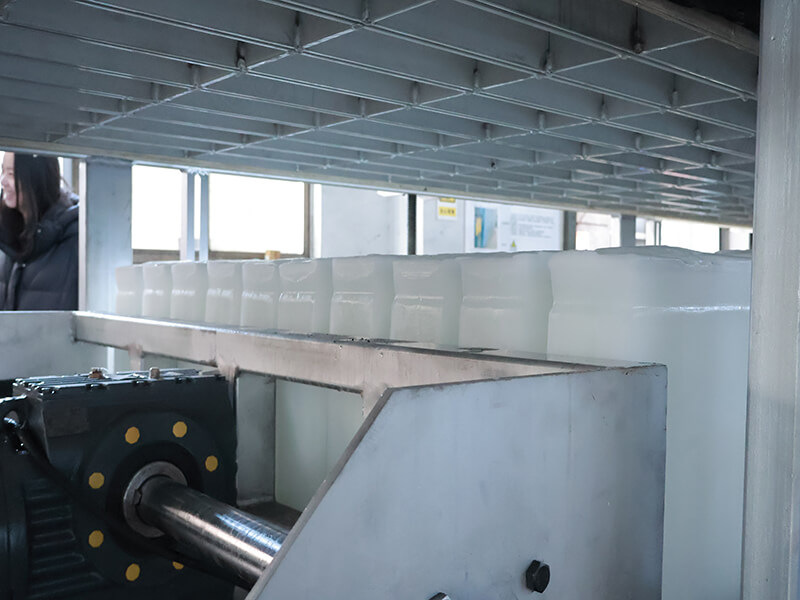
Moving released blocks out of the machine and into downstream handling is part of the customer’s production workflow. Including an ice-pushing system in the overall configuration allows the receiving area, movement direction and onward transfer route to be considered during proposal development.
Addressing this interface requires the pushing mechanism, receiving path and control sequence to be reviewed together. Before pushing starts, blocks must be ready for removal and the receiving path must be available. Coordinating these conditions provides a practical approach to resolving compatibility issues between equipment movements and site layout.
Validating the Plan Across the Complete Production Cycle
Project coordination ultimately requires operating validation. The proposed schedule of 255 blocks per batch and two batches per day is a planning basis. Capacity assessment must include freezing, ice removal and preparation for the next batch, with final block specifications and representative site conditions used to confirm output.
The Suqian project illustrates the ICEMA factory’s approach to developing an overall production proposal: defining requirements, matching components and coordinating control sequences with handling interfaces within a single production process. This approach provides a foundation for subsequent equipment selection, installation planning and commissioning, while demonstrating the factory’s ability to take on projects, coordinate systems and address site compatibility issues.


